The Impact of Geopolitics on Exporting in 2026 from a SME perspective.
Geopolitical tensions are reshaping global trade in 2026. SMEs face rising energy costs, disrupted shipping routes, slower demand, and tighter payment terms. This article explains the key risks and the practical steps exporters can take to stay resilient.
Agustin Baldovino
CEO Sales in a Box AB
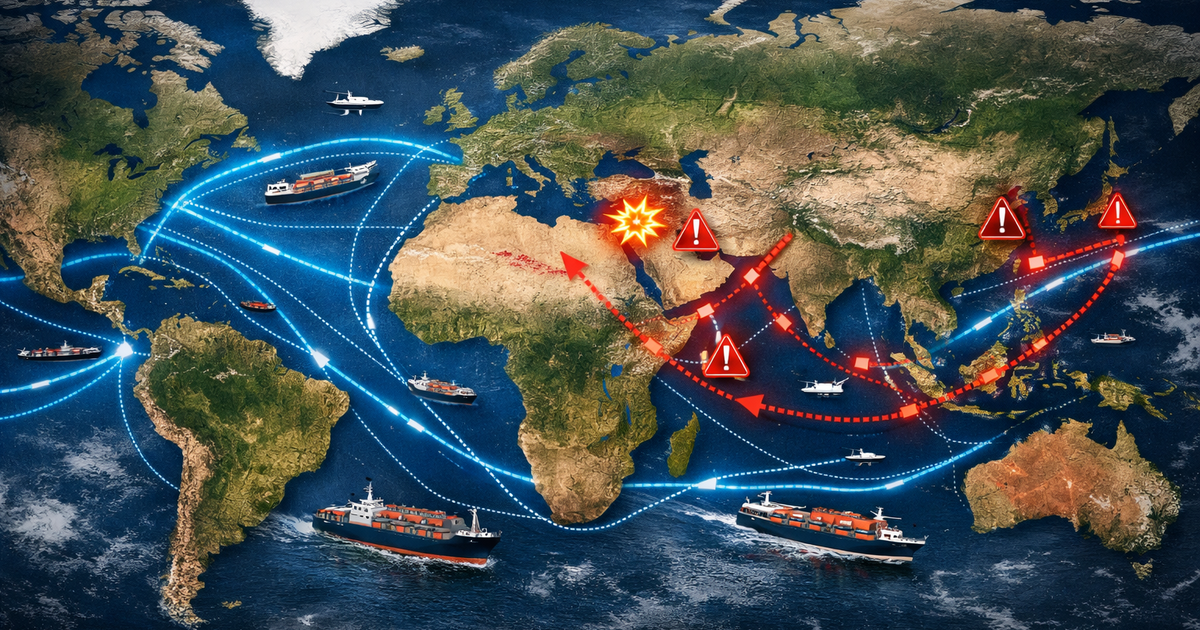
How global tensions, trade disruptions, and shifting risks are reshaping export strategies for manufacturing SMEs.
According to UNCTAD’s Trade and Development Foresights 2026, geopolitical tensions overtook trade policy as the primary global risk entering 2026. This shift occurred after a sharp escalation of conflict in the Middle East disrupted energy markets, financial conditions, and major shipping routes — especially the Strait of Hormuz, one of the world’s most critical corridors for oil and gas transport.
This change in the global risk landscape directly affects SMEs that depend on predictable logistics, stable energy prices, and reliable trade flows.
UNCTAD forecasts that world merchandise trade growth will fall sharply from 4.7% in 2025 to between 1.5% and 2.5% in 2026, driven largely by geopolitical uncertainty and supply chain disruptions.
For manufacturing SMEs, this means, longer sales cycles, more volatile demand, increased competition in stable markets and higher pressure to diversify export destinations
A global survey of 6,000 exporters across 13 countries (Allianz Trade Global Survey 2026) shows that geopolitical shocks are already reshaping export operations.
Needles to say, exporters confidence is in decline, itdropped 6 percentage points to 75% of exporters still expecting growth — a smaller decline than during the 2025 tariff shock, but still significant.
Vietnamese, American, and Spanish firms saw confidence fall by 10+ points while Chinese firms dropped 9 points, reaching 51% confidence.
This uneven impact suggests that SMEs in different regions face different levels of exposure to geopolitical risk.
Across surveyed exporters, logistics and energy have emerged as the most immediate pain points. Around 60% say they are concerned about supply-chain disruption and rising energy and commodity prices, with the highest levels of concern reported in Vietnam (79%), Poland (76%), the UK (72%), and the US (71%). Indian and Chinese firms appear somewhat less worried, likely because they have stronger buffers or more diversified supply options. For manufacturing SMEs, this is already showing up in the form of higher freight costs, longer transit times, more frequent route changes, and a growing need for logistics partners that can adapt quickly across regions.
More than half of exporters are already adjusting their logistics in response to current disruptions. Over 50% are actively seeking alternative shipping routes or carriers, with Vietnam leading at 60% and both the US and India following at 55%. What stands out is that these operational changes are happening faster than contractual changes, which means many SMEs are being forced to stay flexible first and renegotiate commercial terms later.
Trade finance conditions are also becoming more difficult. The survey shows that 43% of firms expect payment terms to deteriorate, up five points since the conflict began, while concerns about non-payment risk have risen to 40%, an increase of six points. The sectors seen as most exposed include pharmaceuticals, construction, and computers and telecoms. For SMEs, this often means dealing with more cautious buyers, longer payment cycles, higher working-capital requirements, and a stronger need for credit insurance or more secure payment methods.
UNCTAD highlights that the conflict in the Middle East is affecting several critical areas at once, including energy markets, financial conditions, and maritime transport, especially through the Strait of Hormuz. Together, these disruptions are slowing global growth and reducing trade flows. For SMEs, the consequences are practical and immediate: higher production costs, more price volatility, and a greater risk of sudden supply-chain interruptions.
Based on the verified data, manufacturing SMEs should focus on a few clear priorities in 2026. First, market diversification is becoming more important as trade growth slows and geopolitical risk rises, making dependence on just one or two export markets increasingly fragile.
A. Market Diversification
With trade growth slowing and geopolitical risks rising, relying on 1–2 export markets are increasingly risky.
B. Supply Chain Redundancy
Supply-chain redundancy is another priority. With more than half of exporters already rerouting shipments, SMEs need to think beyond their default setup by identifying alternative ports, working with multiple freight forwarders, and building safety stock for critical components where possible.
C. Financial Risk Mitigation
Financial risk mitigation also deserves more attention. As payment terms deteriorate, SMEs may need to rely more often on letters of credit, advance payments, trade credit insurance, and more frequent monitoring of buyer risk to protect cash flow.
D. Real‑Time Market Intelligence
Finally, real-time market intelligence is no longer optional. Because geopolitical risk can change from week to week, SMEs need reliable ways to track tariffs, non-tariff barriers, shipping disruptions, energy price movements, and country risk indicators so they can respond before small issues become major disruptions.
Conclusion
2026 marks a turning point where geopolitics, not trade policy, is the dominant force shaping global commerce. For manufacturing SMEs, the impact is clear:
- Higher logistics and energy costs
- Slower global trade growth
- More volatile export demand
- Tightening trade finance
- Increased operational complexity
SMEs that adapt quickly — by diversifying markets, strengthening supply chains, and using real‑time intelligence — will be better positioned to navigate the uncertainty and capture new opportunities.
Sources:
Allianz Trade Global Survey 2026 – “Business as unusual: Exporters adapt to geopolitical shocks” (Export confidence, logistics concerns, operational adjustments, trade finance conditions) https://www.allianz-trade.com/en_global/news-insights/economic-insights/Allianz_Trade_Global_Survey_2026_Business_as_unusual.html?utm_
UNCTAD – “Trade and Development Foresights 2026: Global economy faces a geopolitical challenge” (Shift in global risks, trade growth forecasts, energy/shipping disruptions) https://unctad.org/publication/trade-and-development-foresights-2026-global-economy-faces-geopolitical-challenge?utm_